
What is
Competitive Intelligence?
A practical view of competitive intelligence (CI) in modern product, GTM, and strategy teams.
Competitive intelligence, in practice
Competitive intelligence exists to support decisions in uncertain, competitive environments. It brings together market, competitive, and customer signals to make sense of options and consequences, and decide how to act.
Three pillars of competitive intelligence
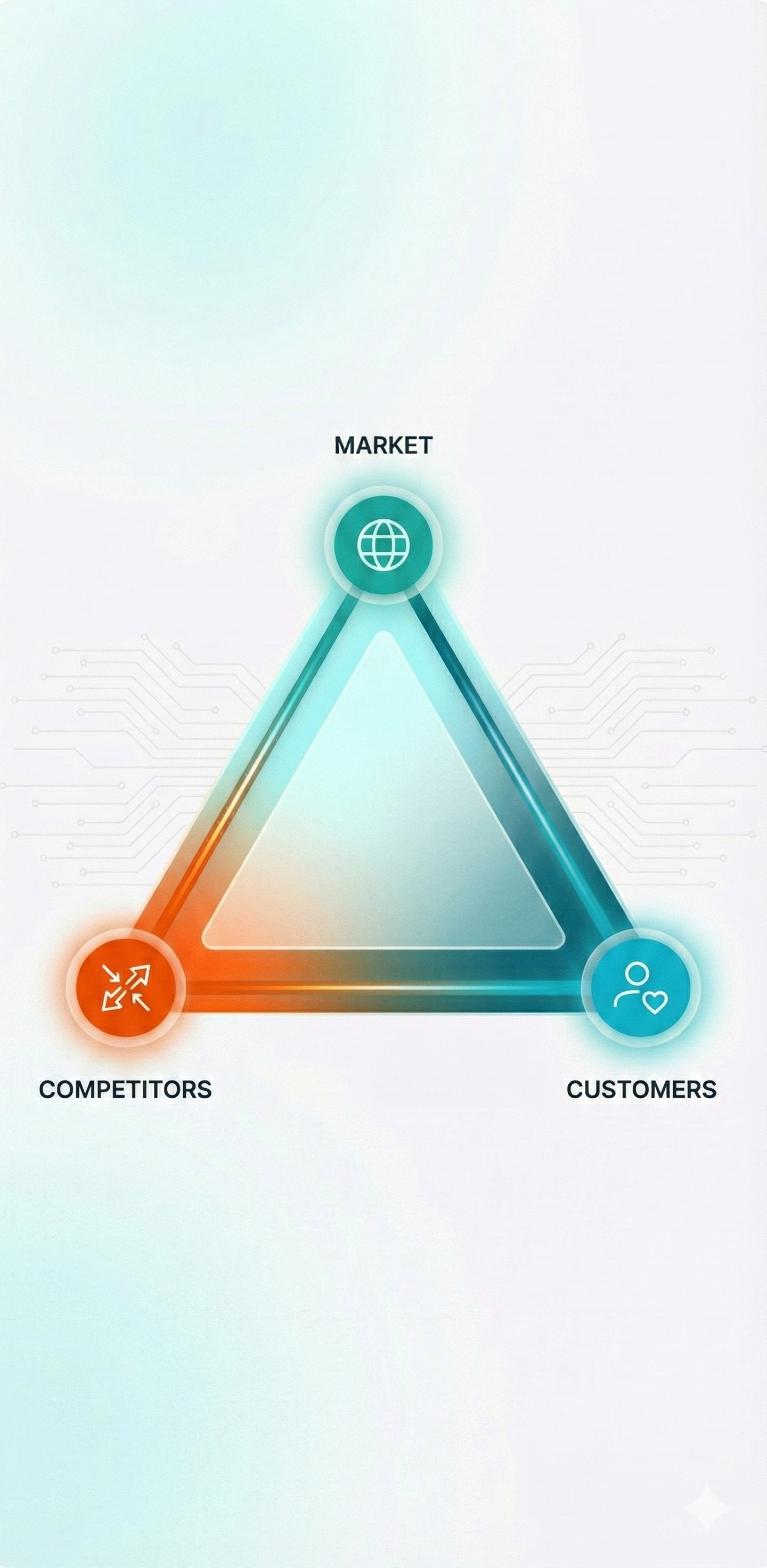
Taken together, they help teams decide what to build, how to position, and where to play.
Market intelligence
Understanding market size, trends, customer needs, and growth opportunities.
Competitive intelligence
Understanding how alternatives position themselves, evolve, and shape the category and buyer expectations.
Customer intelligence
Understanding who buyers are, how they evaluate options, make decisions, and view your offering.
AI has changed how competitive intelligence work gets done. It expands coverage, speeds up discovery, and helps surface patterns across large volumes of information.
Used well, AI supports ongoing, automated research and analysis, keeping relevant signals visible over time and freeing teams to focus on interpretation and decisions. Judgment and decisions remain human.
AI in competitive intelligence

How teams use
competitive intelligence
-
When teams are deciding what to build or not build
Examples:
Does this reflect a real gap for us, or an edge case?
Which roadmap bets matter given buyer alternatives and market direction?
-
When teams are deciding how to position and sell
Examples:
Which strengths should we lead with in our positioning?
Where does differentiation actually land?
Why do buyers choose other options?
-
When teams are deciding where to play
Examples:
Are adjacent markets real opportunities or early noise?
How do competitive dynamics affect entry, partnerships, or investment?
Common patterns that limit the value of CI
Treating CI as information gathering or a stream of updates rather than decision support
Producing research without translating it into priorities or consequences
Looking only at named competitors instead of the full set of buyer alternatives
Running CI as a one-off effort instead of an ongoing practice

If this resonates
Research & advisory
Hands-on competitive and market intelligence tied to concrete product, GTM, and strategy decisions.
Mentoring & workshops
Working with teams to build stronger CI judgment and modern ways of working.
Practical guides
Writing on CI best practices, research approaches, and decision frameworks.